
Sidewall Plates
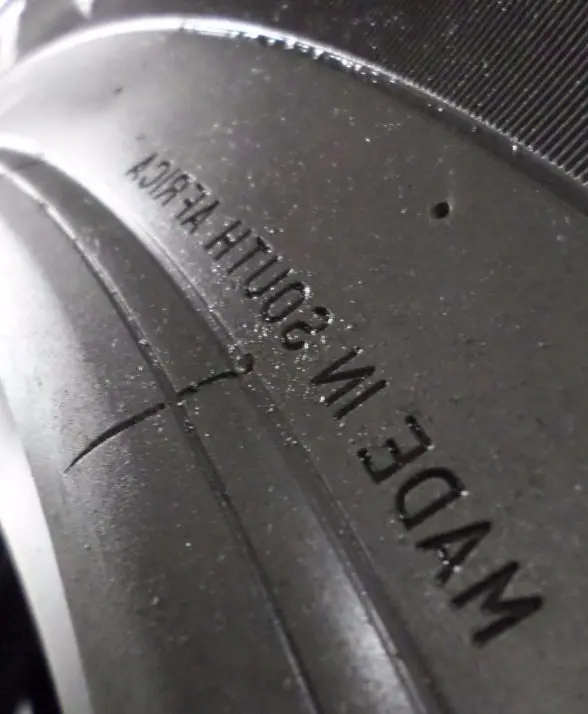
Sidewalls are non-reinforced extruded profiles with additives to give the sides of the tire good abrasion resistance and environmental resistance. Additives used in sidewall compounds include antioxidants and antiozonants. Sidewall extrusions are nonsymmetrical and provide a thick rubber area to enable molding of raised letters.
The sidewalls give the tire resistance against the environment. Sidewall plays an important role in strengthening of tire.
Tread Sectors
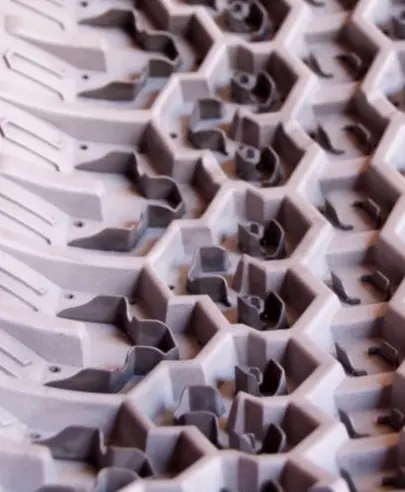
The tread is a thick extruded profile that surrounds the tire carcass. Tread compounds include additives to impart wear resistance and traction in addition to environmental resistance. Tread compound development is an exercise in compromise, as hard compounds have long wear characteristics but poor traction whereas soft compounds have good traction but poor wear characteristics.
A variation to the completely milled profiles is the combination of lathed tread contour and inserted tread ribs and sipes. With this process extremely high true running accuracy with simultaneously high surface quality can be realized. Additionally this variation has the advantage of replacing damaged tread ribs and being able to mill these ribs in spite of a high quantity of sipes.
PCT Moulds
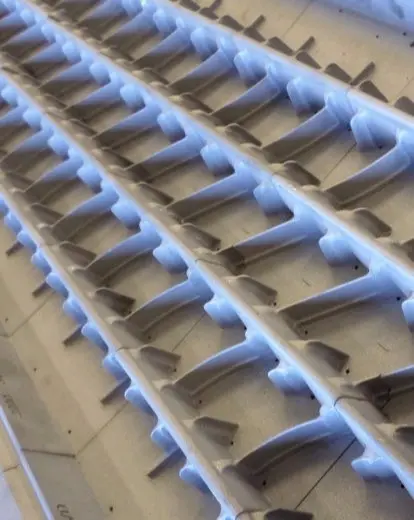
As our product durability increases continuously, the need as well as the supply of completely milled profiles is rising. In addition to that the continuous demand for higher quality and closer tolerances constantly increase the market for these molds made of aluminum or steel.
The separating lines between the single segments have a tight tolerance, so that the gases can escape but a discharge of the rubber mixture is impossible. Therefore the outer surface of the tire is smooth all around and any refinishing of the tire is eliminated afterwards.
Injection Moulds
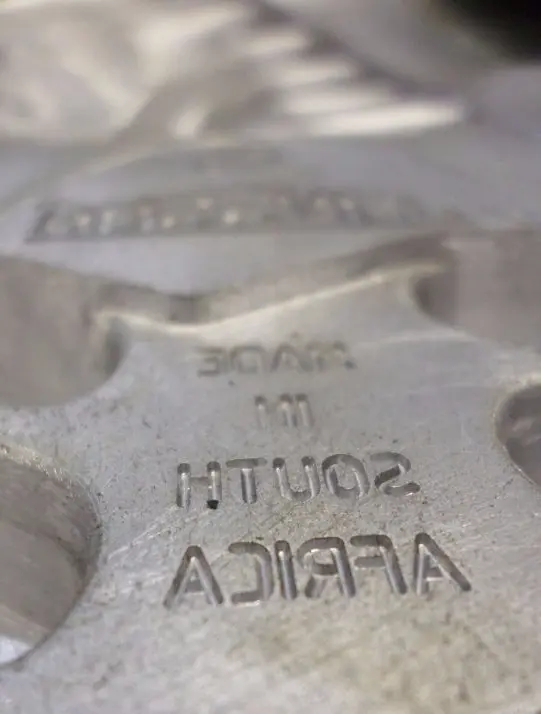
The principal advantage of injection molding is the ability to scale production en masse. Once the initial costs have been paid the price per unit during injection molded manufacturing is extremely low. The price also tends to drop drastically as more parts are produced.
Designing a part that’s suitable for injection molding versus one that’s suitable for machining, thermal forming means taking into consideration some of the differences between the various fabrication techniques and recognizing when your project is best suited.